
The California Kingsnake
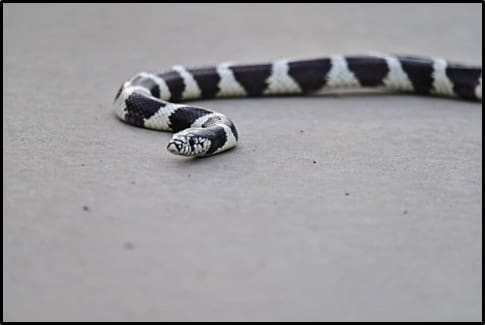
WHY IS THIS WETLANDS PARK RESIDENT CALLED THE “KING” OF SNAKES?
What a beautiful snake! Its colorful alternating black and white bands and smooth, shiny scales make this California kingsnake (Lampropeltis californiae) really eye-catching. The genus name for kingsnakes, Lampropeltis, comes from Greek words meaning “shiny” and ” shield,” and the smooth scales of California kingsnakes are definitely shiny. They are also quite smooth; when I pet a kingsnake, I always think of patent leather.
California kingsnakes are not always black and white banded like the one in our photo. While most sport striking alternating dark and light bands, the band colors range from black and white to brown and cream. Some populations also have stripes that run longitudinally from front to back instead of the more common banded pattern.
The variety of color morphs is one reason California kingsnakes are popular as pets (along with their generally docile temperaments and relatively easy care). In nature, though, the color patterns serve as far more than decoration, providing essential “shade-and-shadow” camouflage to help the snakes hide from predators. A surprising variety of other predators regard kingsnakes as tasty meals, including hawks and eagles, coyotes and foxes, skunks, bobcats, and yes, other kingsnakes!
California kingsnake range includes the states of Oregon, California, Nevada, Utah, and Arizona, and extends into southwestern Colorado, northwestern New Mexico, and south into Mexico. These snakes are not particular about habitat; a wide variety of places including forests and woodlands, swamplands and river bottoms, grass and shrublands, open desert, and even suburban areas can be called home. They are not picky eaters, either. The “Kingsnake cafeteria menu” includes small mammals, birds and eggs, lizards, frogs, arthropods and even snakes (including rattlesnakes – the reason they are called “kingsnakes”). Kingsnakes hunting rattlesnakes do not have to worry about an accidental bite since they are naturally immune to the venom of rattlesnakes from their local habitats!
Kingsnakes are constrictors (the strongest in proportion to body weight of any snake) and are completely harmless to people, but like all wildlife, they are best viewed with “eyes only.” When approached or frightened they may hiss, strike, and vibrate their tails to scare away the theat. If picked up or handled, they may bite to defend themselves (and their teeth are very sharp) or even defecate all over the handler (very stinky)!
Kingsnakes are often nocturnal in summer but can also be active at Clark County Wetlands Park during the day when the weather is a bit cooler. So, watch as you walk Park trails for kingsnakes crossing, sunning themselves in stacks of rocks, or even climbing a tree, especially on cooler days. It’s a rare treat to see one!
– By Chris Leavitt, President; photo credit: Phil Martini
Please enjoy these YouTube videos!
Meet Day-O: Miller Park Zoo’s California Kingsnake
WCIA News 2:46
California Kingsnake Meets the Roadrunner
Wile E. Coyote & Family 1:46
California Kingsnake #reptiles#snake
Rob Torres 1:41