
The American Pipit
WHAT WETLANDS PARK VISITOR IS EASIER HEARD THAN SEEN?
The American Pipit
“Pi-pet-pi-pet-PI-PET!” American Pipits often announce themselves in flight, calling out their name as they pass overhead. You may hear them before you see them, since their distinctive flight song carries farther than their subtly colored bodies. On the ground, pipits are easy to miss—their camouflage blends so well that they often go unnoticed until one moves.
At about 6½ inches long, American Pipits are roughly the size of sparrows and share similarly muted brown-to-gray streaked plumage. A closer look reveals clear differences. Sparrows hop, while pipits walk with a deliberate stride. Pipits also have slimmer bodies, longer legs and tails, and longer, more pointed bills. Their feet feature a long hind toe (called a hallux) and toenail, an adaptation that likely helps them walk and forage on unstable surfaces such as mudflats and snowfields.
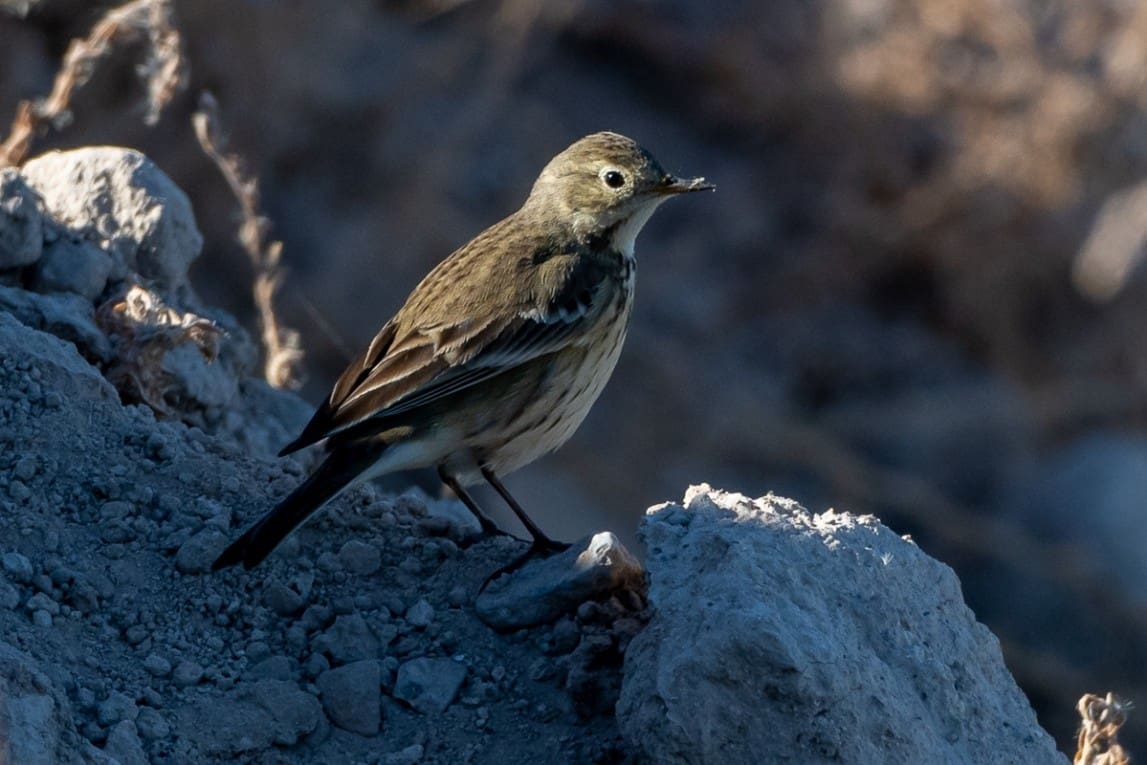
American Pipits are winter residents at Clark County Wetlands Park, where they forage on the ground for insects, grass and weed seeds, and small aquatic invertebrates along muddy shorelines. Often seen in pairs or small flocks, they stride briskly while bobbing their tails. They are not especially shy and may allow a close approach, but when flushed into flight, their white outer tail feathers flash into view. The bird pictured here was photographed at the Pabco Trailhead.
During the breeding season, American Pipits nest primarily in the high Arctic tundra, with smaller populations in isolated high alpine areas farther south. In Nevada, confirmed breeding has occurred in the Spring Mountains at Mount Charleston and in the Ruby Mountains. Pipits nest on the ground, building well-concealed nests of grasses and twigs lined with fine grass and sometimes hair, and typically raise one brood of three to seven young each year.
For those of us who don’t live in the Arctic or above alpine treeline, Wetlands Park offers a great opportunity to see American Pipits in winter. On walks along park trails, listen for their “pi-pet” calls overhead and watch for small flocks foraging in open areas and along muddy pond and stream edges. Binoculars help—especially if you want a good look at those long back toes!
—By Chris Leavitt, President; photo by David Walker
Please enjoy these YouTube videos!
American Pipit, Anthus rubescens, foraging, Rob Curtis Nature Videos 6:39
American Pipit – Pat O’Neil Bird ID’s, HOHvidguy 2:46
American Pipit, Saint John, NB; Ethical Birding NB 1:18