The Creosote Bush
What Wetlands Park Plant Releases a Pungent Scent Before and After It Rains?
Found throughout Clark County Wetlands Park’s driest habitats, the creosote bush (Larrea tridentata) is a hardy shrub and one of the most common plants of the Mojave Desert. Visitors often notice its strong smell, which many identify as the “scent of rain” before and after it falls.
The history of the creosote bush in the Mojave Desert goes back about 11,000 to 12,000 years. After the last Ice Age, the climate became warmer and drier, allowing the plant to spread north into places like southern Nevada. Today, it dominates huge areas of desert land, growing in evenly spaced groups, with each plant competing for limited water in the soil.
The creosote bush is perfectly designed for hot, dry environments that often receive less than four inches of rain per year. Its deep, wide root system quickly absorbs water after rare desert rainstorms, and its small “evergreen leaves have a “waxy” coating that helps retain water in extremely dry conditions. As a result, the plant can photosynthesize long after the dryness of the soil has forced other plants into dormancy. When rain falls, the bush responds rapidly by producing new stems and leaves.
Individual creosote bushes usually grow to between three and ten feet tall, and interestingly, they grow very slowly. Sometimes modest-sized plants can be tens or hundreds of years old, or older. Over time, older stems in the center of the plant die and newer ones grow outward from the plant underground, with new plants growing in a ring pattern. These plants are genetically identical clones of the original plant. Some creosote bush rings are thousands of years old, making them among the oldest living organisms on earth.
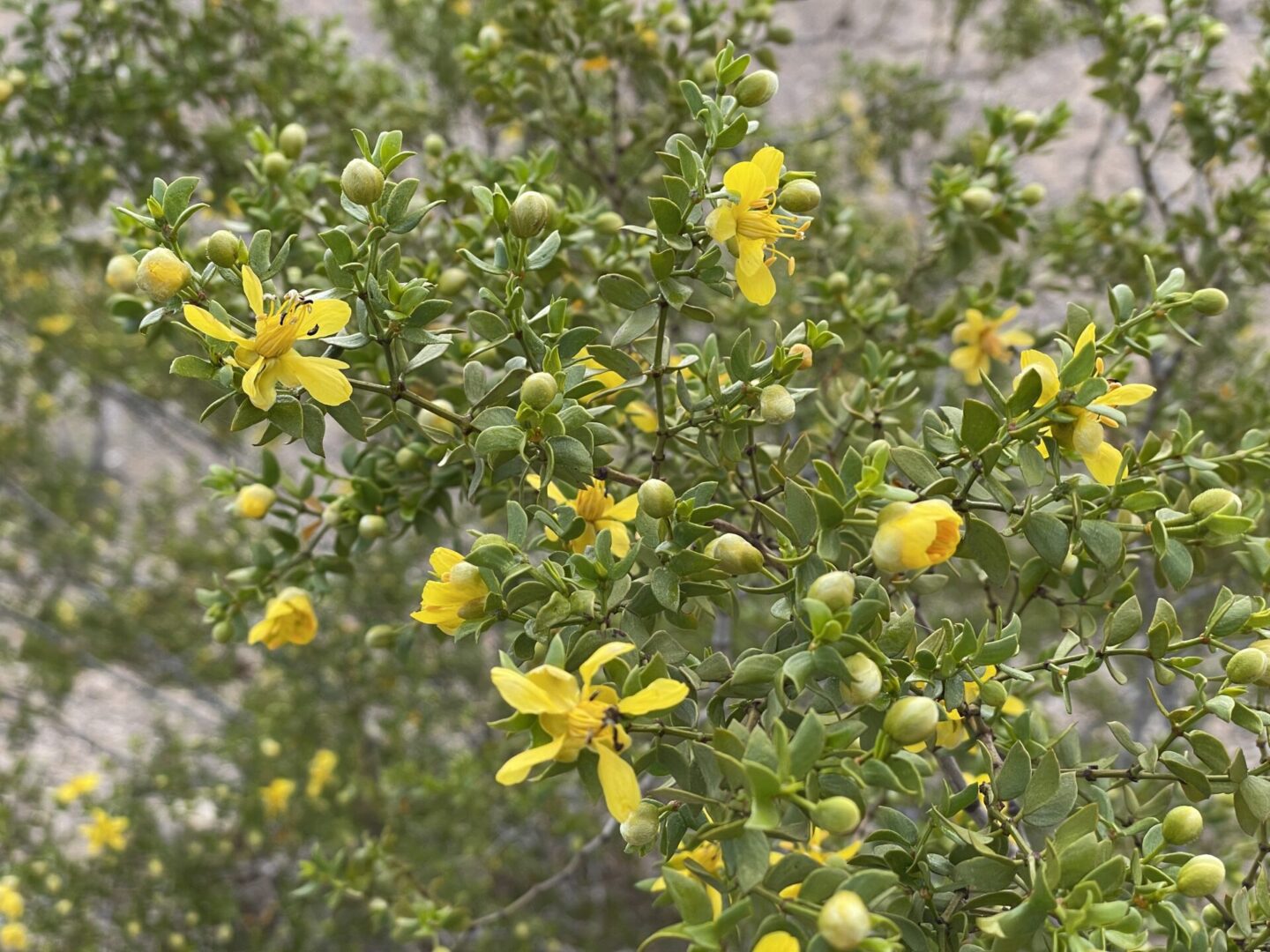
The creosote bush blooms from November through May with small, attractive five-petaled yellow flowers. Bees pollinate the bush, producing fuzzy, pea-sized seed capsules from late spring to summer. While it’s possible to plant the bush from seed, germination is tricky and growth is slow.
For hundreds of years, people have used the creosote bush for medicinal purposes. It contains natural chemicals that can fight bacteria and reduce inflammation. Native Americans brewed branches of the bush as a tea for colds, flu, coughs, and reducing nasal/chest congestion. The tea was applied externally as a wash or boiled down for a salve for wounds, skin sores, athlete’s foot, ringworm, and used as an antiseptic. They also used the plant to treat arthritis, menstrual pain, diarrhea, and kidney stones.
Creosote also plays an important role in the desert food web. The black-tailed jackrabbit (Lepus californicus) will eat the leaves when there is nothing else available. Two insects that will also eat creosote bush leaves are the creosote bush grasshopper (Bootettix argentatus) and the creosote bush katydid (Insara covilleae). Many rodents, such as ground squirrels and long-tailed pocket mice, as well as many insects and lizards use it for shelter (protection from heat and predators) rather than food because its leaves taste bitter and not appealing. Even desert tortoises will dig burrows near creosote bushes because the roots help stabilize the soil.
Unquestionably, the creosote bush is one of the most important plants in the Mojave Desert and our Park, and a true symbol of desert life. Don’t forget to “take a sniff” if you see this iconic desert plant along the trail!
– By Constance Carlson, Director of Communications; photo by Chris Leavitt, President
Please enjoy these YouTube videos:
Native Nevada Nature Episode 8: The Creosote Bush
Nevada Conservation League 31:23
Creosote Ubiquitous Across the Mojave Desert
Clark County Museum 04:13